

Employee recognition has become a core part of how organizations reinforce performance and scale management practices across teams.
For HR and People leaders, the challenge is no longer whether recognition matters. It’s whether your program is actually working the way you expect it to.
Are managers recognizing consistently? Are rewards being used? Is recognition reinforcing the behaviors you care about?
In our latest webinar, Beyond “Thanks”: The Next Evolution of Employee Recognition, we introduced three product updates designed to help answer those questions more clearly and give teams more control over how recognition operates day-to-day.
Below is a breakdown of those updates, along with key moments from the session featuring Guusto's Cameron Waind, Senior Product Manager, and Kwesi Thomas, Executive HR Advisor, whose insights connect each feature back to real-world challenges.
Recognition Is Harder to Operationalize Than It Looks
Most organizations have some form of recognition in place. Fewer have visibility into how consistently it’s being applied or whether it’s driving the intended outcomes.
Kwesi captured that shift early in the conversation:
“How do we make recognition meaningful and visible and measurable? How do we make sure it has a high impact versus just the quick thank you's?”
That question reflects a common gap. Recognition exists, but it is difficult to measure, difficult to standardize, and often uneven across teams.
Each of the updates below is designed to solve a specific operational challenge that shows up when programs start to scale.
1. AI Recognition Scores
One of the most persistent challenges in recognition programs is inconsistency. Some managers recognize frequently and thoughtfully, while others do it sporadically or without much specificity. Over time, that inconsistency creates very different employee experiences across teams.
In most cases, the issue is not a lack of intent. It’s a lack of clarity around what effective recognition actually looks like.
As Cam explained:
“It’s not enormously clear what good looks like in the recognition space… that ambiguity was leading to inconsistent behaviors.”
AI Recognition Scores were built to address that gap directly. The feature evaluates recognition activity across multiple dimensions, including how often recognition is given, how broadly it is distributed, how it influences others, and how strong the messages are in terms of tone, specificity, and alignment to values.
At a glance, that might look like a scorecard. In practice, it functions more like a feedback loop.
Instead of simply tracking activity, it helps managers understand how their recognition is landing and where they can improve. A manager who recognizes frequently but lacks specificity will see that reflected. Someone who recognizes a narrow group of employees will be prompted to broaden their reach. The goal is not just to measure behavior, but to guide it.
Kwesi emphasized how this changes the way leaders engage with recognition:
“The recognition score helps give you a baseline but also a guide as to how to get better.”
For HR and People leaders, the value extends beyond the individual manager. Recognition becomes visible at the team and organizational level. You can identify patterns that were previously difficult to spot, such as teams where recognition is concentrated among a few individuals, or areas where it is happening less frequently.
That visibility makes it possible to take action.
Instead of relying on assumptions, you can coach managers with specific examples, run targeted training where it is needed, and reinforce the behaviors you want to see repeated across the organization.
Why this matters to you
Recognition has traditionally been one of the hardest parts of leadership to standardize. It's personal, subjective, and often left to individual interpretation.
AI Recognition Scores were built to bring structure to that process without removing the human element. They give managers a clearer understanding of how to recognize effectively while removing the guesswork and hand holding. On the flip side, HR leaders can't be everywhere, so this tool gives them a way to see how recognition is actually being practiced across the entire organization.
The result is not just better recognition, it's more consistent leadership behavior, stronger alignment to company priorities, and a recognition program that can be actively managed rather than passively observed.
2. Guest Redemption
For many organizations, the biggest issue is not sending recognition. It’s making sure employees actually receive and use it.
This is especially true for frontline teams, where access to email, devices, or internal systems can be limited or inconsistent.
Kwesi described how difficult it can be to even reach employees in these environments:
“How do you reach those people? How do you communicate with them? How do you get them the recognition… at scale?”
Even when recognition is delivered, the redemption experience itself can introduce friction. Login requirements, account creation, and additional steps can interrupt the moment and reduce follow-through.
Cam explained the impact clearly:
“When people hit friction, you start to see drop off… and that moment of recognition can kind of fade away.”
Guest Redemption removes that friction by allowing employees to redeem rewards instantly without creating an account. Whether the recognition is delivered through a QR code, text message, email, or printout, the experience remains simple and immediate.
Kwesi connected this directly to program performance, sharing an example where a meaningful portion of rewards went unused because employees did not complete the process:
“They were spending about $800,000… and $100,000 to $200,000 was not being used… largely because of this issue.”
Why this matters to you
Unused rewards represent more than lost budget, they represent missed moments of recognition.
Want a Simple Structure for Recognizing Employees?
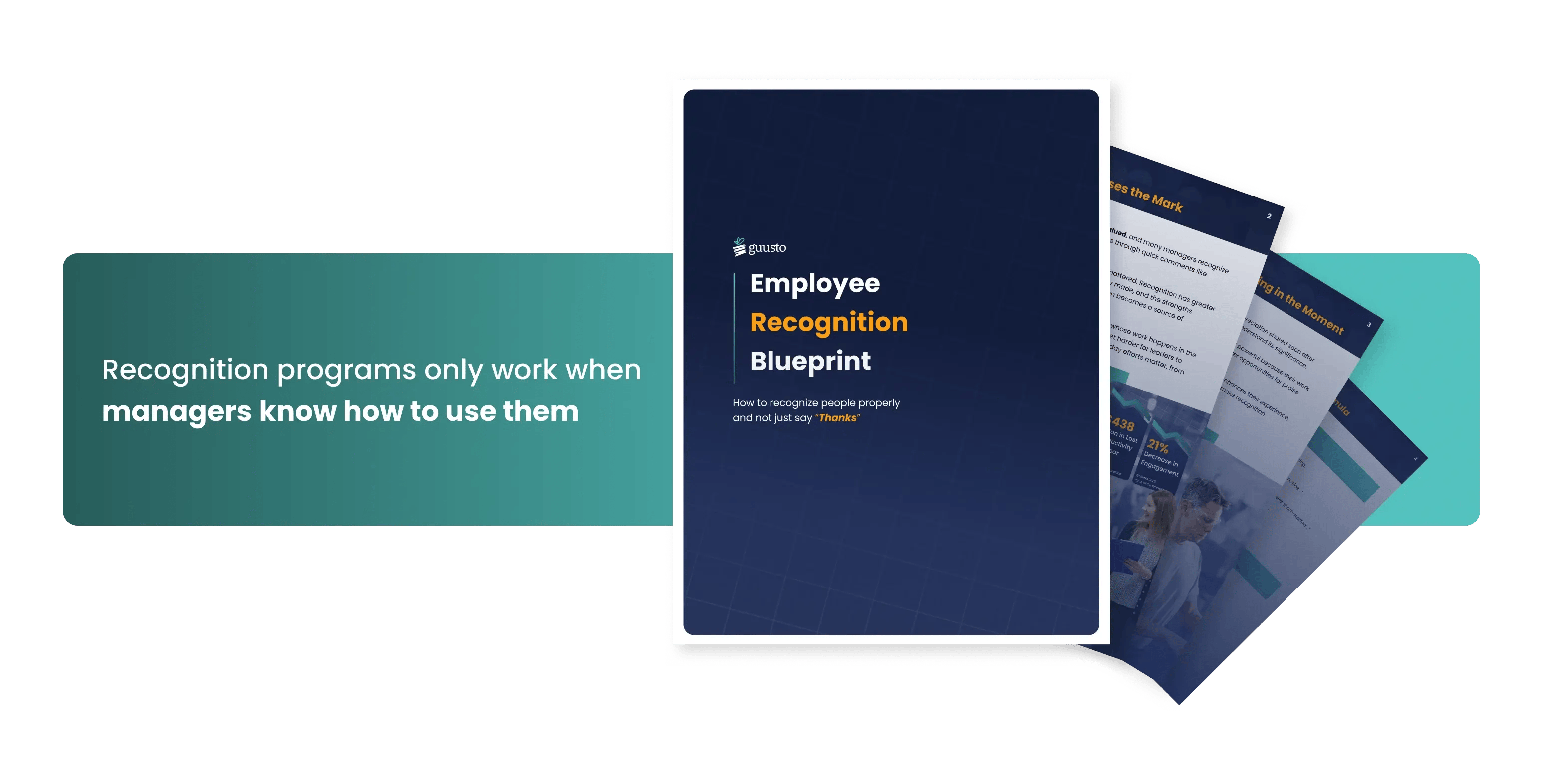
As Kwesi pointed out, recognition is a skill that most managers are expected to have, but rarely trained on. That’s often where programs lose consistency.
The Employee Recognition Blueprint gives leaders a simple and impactful structure for meaningful recognition and equips managers with a template they can use right away.
Download your FREE copy of the Employee Recognition Blueprint today!
3. Branded Swag
Most recognition programs rely heavily on a single type of reward, typically gift cards. While they are flexible, they are not always the right fit for every type of recognition moment.
Cam highlighted this limitation:
“They can be viewed as a little bit transactional… they don’t build that emotional connection to your company.”
The introduction of branded swag gives HR teams more flexibility in how recognition is delivered. Instead of applying the same reward to every situation, programs can be designed to reflect different types of moments, from onboarding and milestones to long-service recognition and team achievements.
Kwesi added an important perspective, particularly for organizations with long-tenured or frontline employees:
“There are people who are 20, 30, 40 years in that company… and they want to represent where they work.”
Swag creates a more visible and lasting form of recognition. It extends the impact beyond a single moment and reinforces connection to the organization over time.
Why this matters to you
Recognition programs are more effective when they reflect the variety of moments they are designed to support.
Swag was introduced to give organizations more flexibility in how they design those moments. It allows HR teams to move beyond a one-size-fits-all approach and create recognition experiences that are more aligned with different types of contributions and milestones.
That flexibility helps ensure that recognition feels intentional rather than repetitive, and that it continues to resonate with employees over time.
A More Practical Way to Scale Recognition
Each of these updates addresses a different challenge.
-
AI Recognition Scores improve visibility, consistency, and direction.
-
Guest Redemption removes friction and increases access.
-
Swag expands how recognition programs can be structured and enjoyed.
Kwesi summarized the broader impact:
“These are all tools… to really tailor the program to meet the needs that you’re trying to go after.”
Together, they shift recognition from something that is difficult to track and uneven across teams into something that can be managed more deliberately.
Where to start
For teams still managing recognition manually, the path forward does not need to be complex.
Kwesi recommends starting with foundational moments like birthdays and anniversaries, ensuring they are delivered consistently and on time:
“Get into a recognition platform that takes care of your milestones and anniversaries… and then start building from there.”
From there, you can layer in more structure, more visibility, and more flexibility over time.
Ready to take the next step?
Explore how you can bring more visibility, consistency, and flexibility to your recognition program.
Book a demo or if you're already a customer, connect with a rep
Watch on demand: Beyond “Thanks” - The Next Evolution of Employee Recognition
What’s Coming Next
This webinar covered three major updates, but it’s only part of what the Guusto product team is building.
As recognition programs continue to evolve, the focus remains on giving HR and People leaders more visibility, more control, and more flexibility in how recognition operates across their teams. That includes making recognition easier to connect with the systems you already rely on.
Deeper integrations with platforms like Dayforce, UKG, and other core HR systems are continuing to expand, helping teams automate key moments, streamline data flow, and reduce manual work when managing recognition programs.
Several enhancements to AI recognition insights, reporting, and program configuration are already in development and will be highlighted in the next showcase.
As Cam hinted during the webinar:
“This will be available mid Q2… and there’s more coming behind it.”
If recognition is an important part of how you support managers and engage employees, there will be plenty more to explore in the months ahead.
Want to stay in the loop? Sign up to get updates on our upcoming webinars, product updates, and practical insights you can apply to your recognition programs.
Don't miss out on Guusto's next webinar!
— Skai Dalziel, Co-Founder & CEO @ Guusto